
8 Things You Didn’t Know About License Plates

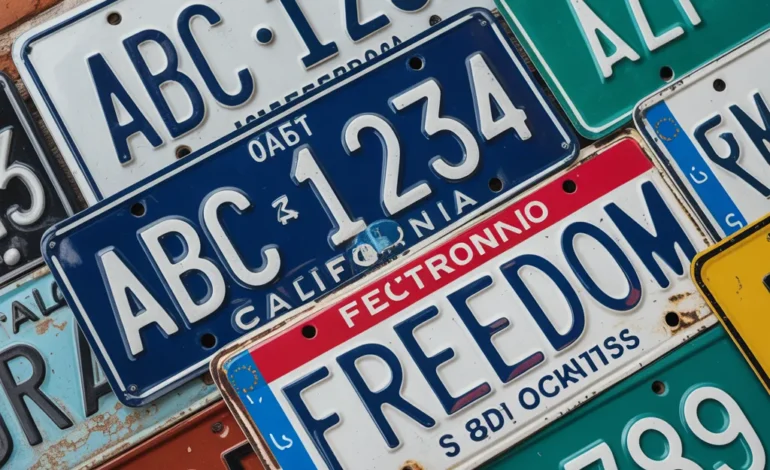
License plates are easy to overlook, yet behind those stamped pieces of metal is a surprisingly complex mix of history, technology, law, design, and culture. In the United States especially, plates reflect everything from state identity to emerging surveillance debates. This article looks beyond the obvious and highlights eight lesser-known aspects of plates that shape how they’re made, used, collected, and regulated today.
Early in the article, it’s also worth noting that plates are no longer limited to government-issued identifiers. As interest in personalization, restoration, and décor grows, consumers increasingly encounter license plates for sale in legitimate retail and specialty contexts that go well beyond motor vehicle registration.
A specialist from https://www.shoplicenseplates.com/ offered the following professional insight: Many people don’t realize how tightly regulated plate dimensions, mounting holes, and reflectivity are, even for novelty or decorative use. When buyers choose items like custom license, it’s important to understand how these standards influence both appearance and compatibility, especially if a plate will be displayed on a vehicle, even temporarily.
Plates Were Once a DIY Project
At the dawn of the automobile era, license plates were not issued by governments at all. In the late 1890s and early 1900s, vehicle owners were often responsible for creating their own identification markers. These homemade plates might be painted onto leather, carved from wood, or stitched onto fabric. Requirements varied widely by city or state, and enforcement was minimal. Some jurisdictions only required the owner’s initials; others asked for a number assigned during registration.
It wasn’t until 1903 that New York became the first state to issue standardised plates. Even then, early government-issued plates were made of porcelain-coated steel and were fragile, heavy, and expensive to replace. Other states followed slowly, each using different sizes, colour schemes, and numbering systems. This lack of uniformity meant that early motorists travelling across state lines often faced confusion or fines.
The do-it-yourself origins of plates help explain why individuality has remained part of plate culture. While modern regulations are far stricter, the desire to customise or personalize identification has deep roots. Vanity plates, specialty designs, and decorative replicas all echo a time when plates were as much personal expression as legal requirement.
Standardisation Took Decades, Not Years
Today, most drivers assume license plates have always been roughly the same size. In reality, national standardisation didn’t occur until the mid-20th century. Before 1956, states issued plates in a wide range of dimensions, with different mounting hole placements and thicknesses. This caused significant problems for automakers, who had to design vehicles that could accommodate multiple plate formats.
The turning point came through cooperation between U.S. states, Canadian provinces, and the automobile industry. The result was the now-familiar 6-by-12-inch plate for passenger vehicles. This agreement simplified manufacturing, reduced costs, and improved cross-border compatibility.
Even with standard sizing, states retained control over materials, fonts, colors, and slogans. That balance between uniform structure and local expression remains a defining feature of U.S. plates. It also influences aftermarket products, from frames to novelty plates, which must adhere to those physical standards to fit correctly.
Plate Materials Are More Advanced Than They Look
Although they appear simple, modern plates are engineered products. Most U.S. plates are made from aluminum, chosen for its light weight, corrosion resistance, and recyclability. The reflective sheeting applied to the surface is a critical safety feature, designed to bounce light from headlights back toward the source, making plates readable at night and in poor weather.
That reflective layer is not just paint. It’s a laminated material embedded with microscopic glass beads or prismatic structures. These materials must meet strict federal visibility requirements, and failure can result in plates being recalled or replaced. Over time, exposure to sun, road salt, and pollutants degrades reflectivity, which is one reason states require periodic plate replacement.
Even decorative and commemorative plates often mimic these material choices, especially when designed for realistic display. The technology behind plates illustrates how safety, durability, and cost efficiency converge in an object most people never think twice about.
Plates Are a Quiet Tool of Surveillance
License plates play a central role in modern traffic enforcement and data collection. Automated license plate readers, or ALPRs, use cameras and software to capture plate numbers, timestamps, and locations. These systems are used by law enforcement, toll agencies, parking operators, and even some private companies.
While ALPRs improve efficiency in finding stolen vehicles or managing traffic flow, they also raise privacy concerns. In many states, plate data can be retained for months or years, even when no crime is involved. Policies governing who can access this information vary widely, and legal challenges continue to shape the boundaries of acceptable use.
Understanding this context adds depth to the humble plate. It’s not just an identifier attached to a car; it’s a data point in a much larger information network. This reality has influenced public debates, legislation, and even consumer behavior, such as the growing interest in plate covers and frames, some of which are now restricted or banned.
Specialty Plates Fund More Than You Think
Specialty and commemorative plates are often marketed as expressions of support for causes, universities, or organizations. What’s less known is how significant these programs can be as funding sources. In some states, specialty plates generate millions of dollars annually for conservation efforts, veterans’ services, public arts, or educational programs.
The structure typically involves an additional fee paid by the vehicle owner, a portion of which goes directly to the associated cause. States benefit by increasing revenue without raising taxes, while drivers gain a way to signal affiliation or values.
However, not all specialty plate programs are equally transparent. The percentage of funds that actually reach the intended beneficiaries can vary, and administrative costs sometimes consume a large share. This has led some states to audit or reform their specialty plate offerings. The result is a system where plates function as miniature fundraising platforms embedded in everyday infrastructure.
Collecting Plates Is a Serious Hobby
License plate collecting, known as deltiology in its broader ephemera context, is more organized and competitive than many realize. Collectors seek plates based on age, condition, rarity, and historical significance. Early porcelain plates, wartime-issue steel plates, and short-lived designs can command high prices.
Condition matters enormously. Rust, extra holes, repainting, or fading can drastically reduce value. Authenticity is also critical, as reproductions are common. Serious collectors rely on detailed reference guides and networks to verify dates, manufacturing methods, and issuing authorities.
Beyond monetary value, plates serve as historical documents. They reflect changes in state boundaries, graphic design trends, political priorities, and even material shortages. For collectors and historians alike, plates offer a tangible timeline of American mobility and governance.
Plate Laws Are More Complex Than Most Drivers Realize
Many drivers assume compliance simply means having a valid plate attached to the vehicle. In reality, plate-related laws cover placement, visibility, illumination, and modification. A frame that covers a state name or registration sticker can be illegal in one state and tolerated in another. Tinted covers, reflective sprays, and altered fonts are frequent sources of citations.
Temporary plates add another layer of complexity. Issued by dealers or DMVs, they’re intended for short-term use but are often abused or forged. This has prompted stricter enforcement and redesigned temporary tags in several states.
These legal nuances matter not just for drivers but also for manufacturers and retailers of plate accessories. Products must be designed with an awareness of varying regulations to avoid encouraging unintentional violations.
Plates Reflect Cultural Identity More Than Cars Do
While vehicles themselves are increasingly globalized, license plates remain distinctly local. State slogans, color palettes, symbols, and fonts communicate regional identity in ways few other objects do. A single glance can reveal where a car is from, and often something about what that state values or promotes.
Over time, these designs become cultural markers. Retired plate styles evoke nostalgia, while new designs sometimes spark controversy. Changes to slogans or imagery can trigger public debate, reflecting deeper tensions about identity, representation, and priorities.
This cultural role explains why plates appear in movies, artwork, and home décor. Detached from their regulatory function, they become symbols of travel, freedom, or personal history. In that sense, plates occupy a unique space between bureaucracy and self-expression, quietly carrying stories wherever the road leads.
About The Author