Essential Electrical Appliances for RV Travel

Modern RV travel expect the same comforts they enjoy at home – fresh meals, climate control, and entertainment – all while parked in remote wilderness. Achieving this requires careful electrical planning, as campground hookups aren’t always available or reliable. The right combination of appliances and power solutions can mean the difference between a stressful trip constantly worrying about battery levels and a comfortable adventure where everything works seamlessly. In this article, we’ll guide you through building a complete RV travel electrical system that balances power needs with practical space considerations, focusing on real-world usability rather than technical specifications alone.
1. Portable Power Station
Minimum Capacity Recommendations
Choosing the right power station capacity depends on your typical usage patterns. For weekend campers running lights and charging phones, a 500Wh unit may suffice, while full-time RVers needing to power a fridge and coffee maker should consider 1500Wh or more. A good rule of thumb: list all devices you’ll use simultaneously, add their wattages, then multiply by how many hours you’ll need between recharges. For example, a 50W fridge + 100W laptop + 20W lights running 10 hours requires (50+100+20)×10=1700Wh. Remember to account for inefficiencies – no power station delivers 100% of its rated capacity. It’s better to have extra capacity you don’t use than constantly ration power.
Must-Have Features
Look for pure sine wave AC outlets to safely run sensitive electronics like medical devices or laptops. USB-C Power Delivery (PD) ports are essential for fast-charging modern gadgets – 60W minimum, with 100W ideal for larger tablets. Solar input compatibility transforms your power station into a true off-grid solution; ensure it supports at least 200W solar input for practical recharging. Other useful features include wireless charging pads (for convenience), parallel capability (to combine multiple units), and app monitoring (to track usage remotely).

2. Cooking Essentials
Electric cooking in an RV requires balancing power consumption with functionality. A 700W induction cooktop uses 30-50% less energy than traditional coils while heating faster – perfect for quick meals. Combine this with a compact 300W electric kettle for coffee and soups. For baking enthusiasts, a 1200W countertop oven can replace a full-size microwave and toaster. The key is staggering usage – don’t run multiple high-wattage appliances simultaneously. Always opt for models with automatic shutoff and temperature control to prevent battery drain. Cooking consumes the most power in an RV, so plan meals around your energy budget just like you would a financial one.
3. Climate Control
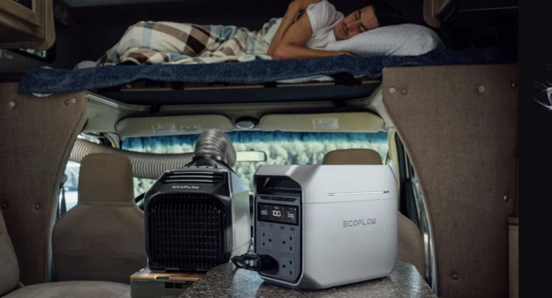
Traditional RV travel air conditioners (1500W+) drain batteries too quickly for off-grid use. Instead, consider a 12V DC ceiling fan (30W) for airflow and a 500W portable evaporative cooler for dry climates. Heated mattress pads (50W) provide warmth using far less energy than space heaters. For extreme conditions, a diesel parking heater (10W for the fan plus fuel) offers efficient heating without taxing your electrical system. Always insulate windows with reflective covers – prevention reduces the need for active cooling. Climate control isn’t about replicating home conditions but maintaining comfort within your power means.
4. Lighting Solutions
Replace all incandescent bulbs with LED equivalents – a single 5W LED produces the same light as a 40W traditional bulb. Install dimmable strip lights under cabinets for task lighting at night. Motion-activated pathway lights (solar-powered) prevent tripping without draining your main battery. For ambiance, battery-operated candles provide flickering light without fire risk. The key is layering lighting – bright task lights where needed, soft ambient lighting elsewhere, all controlled separately. Proper lighting transforms an RV travel from a utilitarian space into a welcoming home after sunset.
5. Food Preservation
A 12V compressor fridge (50W) uses half the energy of older absorption models while cooling faster. For shorter trips, a high-quality cooler with freezer packs can suffice if refreshed with ice every 3-4 days. Consider a 12V portable freezer (80W) for serious meal preppers – it doubles as extra fridge space when needed. Always position your fridge/freezer in a well-ventilated area – poor airflow makes the compressor work harder. Food preservation is non-negotiable for both safety and comfort, making it worth investing in efficient solutions.
6. Entertainment & Connectivity
A cellular signal booster (20W) can mean the difference between no service and video calls from remote locations. Streaming via a 12V Roku stick (5W) uses less power than a game console. Portable projectors (50W) with pull-down screens create an outdoor theater without permanent installation. For music lovers, a Bluetooth speaker (10W) provides better sound than built-in RV travel speakers at lower power draw. Always download content when connected to shore power – streaming over cellular data consumes both battery and potentially expensive data plans.
7. Power Accessories
Solar Panel Kit
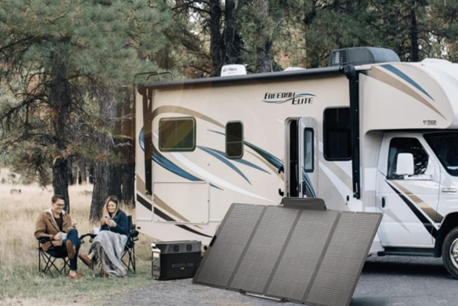
A 200W portable solar panel can fully recharge a 1000Wh power station in 5-6 hours of good sunlight. Look for foldable designs with kickstands for easy positioning. Built-in charge controllers prevent overcharging, while weather-resistant construction ensures durability. For larger systems, consider rigid panels permanently mounted on the RV roof – they charge while driving or parked. Solar power isn’t just eco-friendly; it provides true energy independence when boondocking.
DC-AC Power Inverter
While most RVs have built-in inverters, adding a dedicated 300W pure sine wave model for sensitive electronics prevents interference from larger appliances. Use it for laptops, cameras, and medical devices while reserving the main inverter for high-power needs. Modern inverters with automatic sleep modes draw less than 0.5A when idle – crucial for preserving battery life. Think of inverters as translators between your DC battery and AC devices – you want the most efficient one available.
Conclusion
Creating an effective RV power system requires matching your actual needs with appropriate technology rather than buying the most powerful options available. Start with a quality portable power station (like the EcoFlow portable power station for its balance of capacity and features), then add appliances based on your travel style. Remember that every watt saved means more time off-grid – sometimes the best solution is a low-tech alternative rather than another power-hungry gadget. With careful planning, your RV can provide all the comforts of home without being tethered to electrical hookups.
About The Author