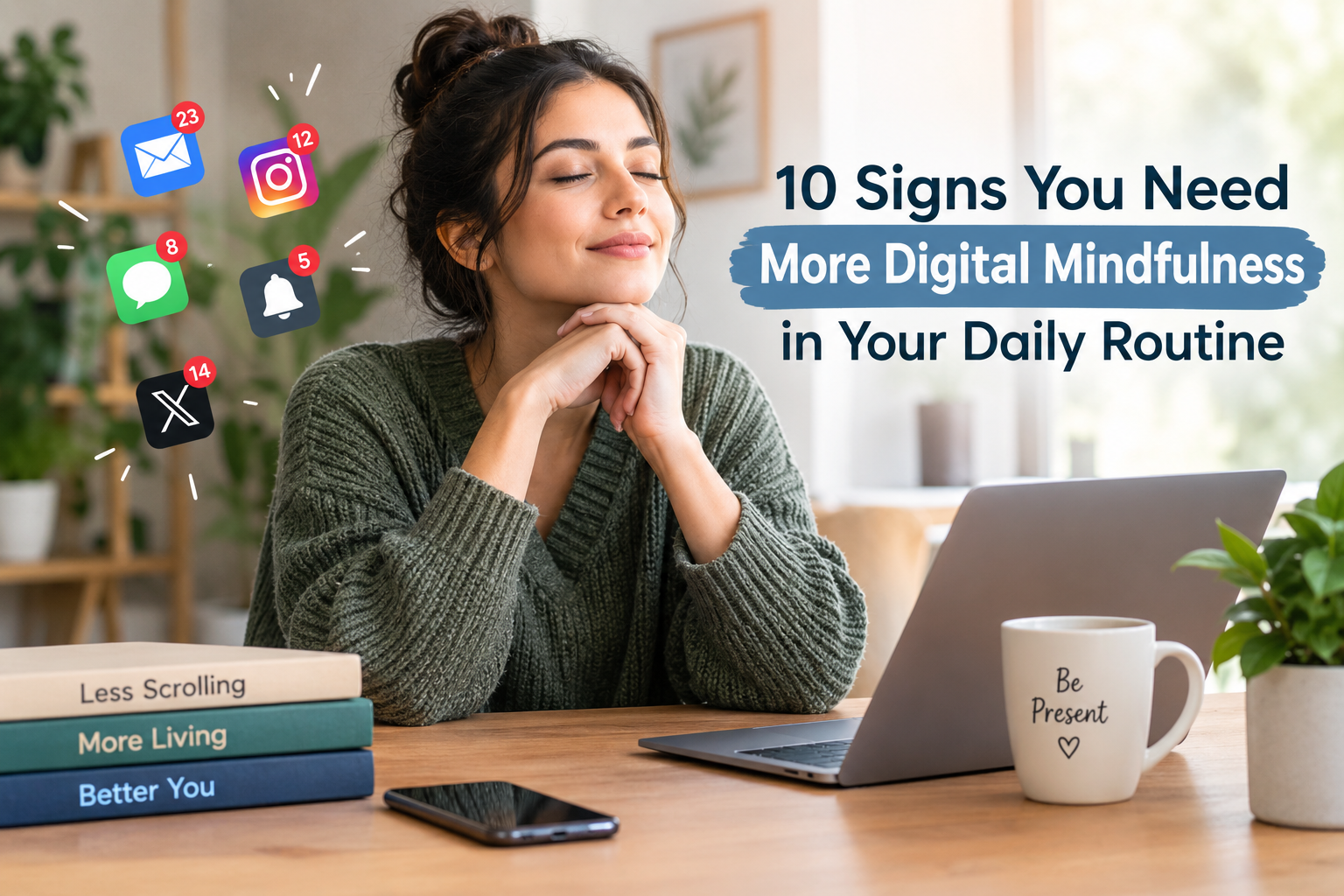
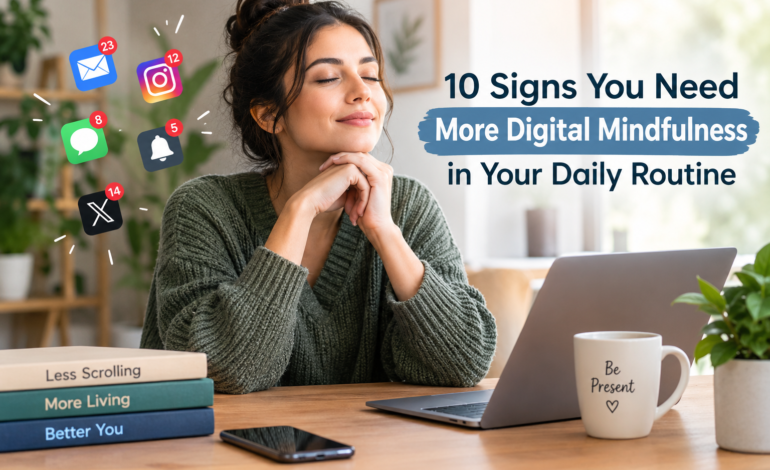
10 Signs You Need More Digital Mindfulness in Your Daily Routine

Introduction
Smartphones buzz. Notifications pile up. Tabs multiply. It’s not until we sit down to calculate that we realize how much time we’ve spent staring at screens between checking email and scrolling social media that we realize we’ve spent a lot of it. If you recognize this feeling, your body and mind could already be telling you to take it easy.
Digital mindfulness is being aware of your technology use instead of operating on autopilot—how you use it, when you use it, and why. Here are 10 obvious examples of how your everyday life might have more intentional tech habits and some practical digital detox suggestions to get you back on track and help you find some peace of mind.
1. You Reach for Your Phone Without Thinking
An important indicator of mindless screen use is trying to unlock your phone before you know what you are looking for. This automatic behavior is one of the first things that is targeted in digital mindfulness exercises, which help you to stop and ask, “Why am I picking this up right now?
Try this: When you want to unlock your phone, take one deep breath and state your intention (for instance, you could say “checking the time” or “replying to Mom”).
2. Your Screen Time Reports Shock You
The aim of the weekly screen time notifications is to alert you, but for many of us they elicit real surprise or guilt. If you’re still consuming more screen time than you’d like each day, despite your efforts to reduce your daily consumption, it’s a solid indicator that you need to improve your screen time management.
Try this: Don’t ignore the notification; set time limits in the app and review weekly.
3. You Feel Anxious Without Your Phone Nearby
The anxiety that accompanies the absence of your phone, which we’ve all experienced, is known as “nomophobia. When you’re feeling restless and nervous when you’re out of your phone, you need to get away from technology.
Try this: Have short phone-free times—30 minutes at first and build up.
4. Social Media Comparison Is Affecting Your Mood
The carefully designed, aesthetically pleasing, and edited text you see on social media can take a toll on self-esteem in a subtle way. If you’re feeling unwell while or after scrolling, you may need to consider going on a social media fast.
Try this: Unfollow accounts that make you compare and follow accounts that bring value/joy to your news feed.
5. You Struggle to Focus on One Task at a Time
Our brains develop a tolerance to being interrupted regularly, and the more often we are interrupted, the harder it will be to focus for extended time periods. Need the help of a smartphone to read books or finish work tasks? This may indicate a digital fragmentation problem.
Try this: apply ‘focus techniques’ such as the Pomodoro method and phone-free work blocks.
6. Your Sleep Quality Has Declined
Use of blue light and late-night scrolling is definitely associated with sleep disturbances. For those who enjoy reliving Instagram Reels or struggle to shut the screen off at bedtime, it’s an obvious call to action for better digital wellbeing.
Try this: No screens 60-90 minutes before bedtime; set a “digital sunset.”
7. You Multitask Across Devices Constantly
It’s impossible to multitask (watch TV and check your cell phone), and it may be leading to mental fatigue. This is what we’re talking about when we are talking about digital burnout.
Try this: Use devices one at a time—one screen, one purpose.
8. You’ve Lost Touch With Offline Hobbies
When you used to do something (read, cook, go for a walk, paint) offline, it’s time to find out what you are doing online instead. Digital detox isn’t a move towards being 100% offline; it’s a move towards taking space away from technology.
Try this: Set aside one screen-free activity time each week as an appointment.
9. You Feel Mentally Exhausted, Not Refreshed, After Screen Time
If you are getting a real rest, then you will know that you will feel rejuvenated. If you are feeling foggy, irritated, or more tired after starting to scroll social media or watch too many movies, then that’s a sign that you are going into overdrive mode, not relaxing mode.
Try this: Ditch passive scrolling for active rest, which can include a short walk, a stretch or gentle breathing exercises.
10. You Check Notifications During Conversations or Meals
When your phone is interrupting connection—buzzing during dinner, meetings, or conversations, and you automatically pick it up—this is one of the easiest ways to know that you’ve got your tech on when you should have your presence on.
Try this: Establish no phone zones to preserve face-to-face communication (e.g., dinner table, bedroom).
How to Reduce Screen Time: Practical Digital Detox Tips
If you have some of these symptoms, do not worry; slight, steady changes will help bring a healthier balance. These are some tips to help you cut down on screen time:
- You can also disable alerts that you don’t use and, thus, reduce the urge to constantly check your phone.
- Control App Usage for Social and Entertainment Apps.
- Set aside a safe place in the house, like the bedroom and dining table, where you don’t have to go by the phone.
- Turn on the grayscale mode, which will minimize stimulus to your phone.
- Plan a digital fast (not a digital cleanse, but just a few hours!)
- Use deliberate tasks when scrolling, for instance, journaling, walking, or reading.
- Practice digital mindfulness daily—for example, notice the breath before checking your phone.
Final Thoughts
Digital mindfulness isn’t about dumping technology; it’s about technology used for a purpose, not upon us. Recognizing your worth: In the spirit of this, here are 10 warning signs and simple digital well-being tips you can use to help you change your relationship with screens and to make more time in your day be present, focused, and calm.
About The Author