How to Beat the Social Media Algorithm Without Paid Ads

This is something that every creator and small business owner has experienced: something you post that you are truly proud of, and it barely gets any reach. In the meantime, a hurried, low-quality video by another guy gets thousands of views in one night. You might think that the only thing you can do is “buy visibility. However, this isn’t quite accurate. Paid promotion will help to accelerate growth, but it is not necessary. Knowing exactly how the social media algorithm works and adapting your plan to the algorithm will help you get genuine, organic reach for no rupee or dollar spent on ads.
This guide helps you to understand what is really going on in the background and what can be done about it.
What the Social Media Algorithm Is Actually Doing
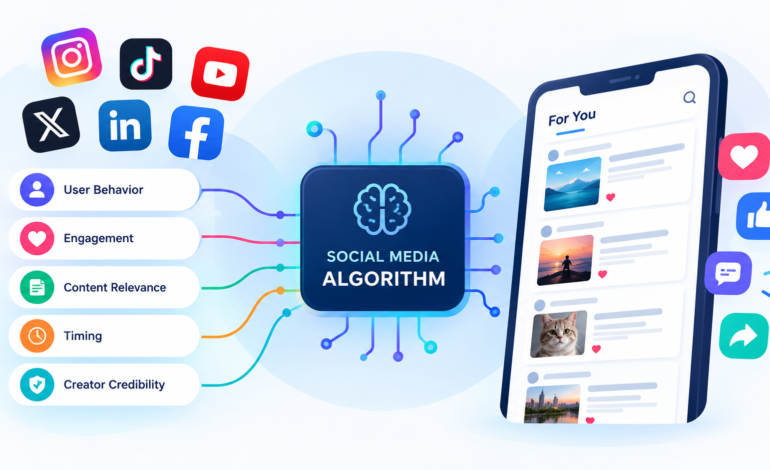
In essence, all of the big platform algorithms are attempting to solve the same issue: how to engage users for an extended period of time. It does so by forecasting consumer content interactions and delivering more of that content to the consumer. The prediction engine operates on machine learning models; that’s why so many platforms have openly declared their ranking systems as social media algorithm AI. These systems constantly analyze signals such as watch time, the number of repeats, shares, saves, and comment depth to determine if it should be distributed more.
This means that the algorithm is not a rulebook; it is a changing algorithm. This is a continuously evolving model that gets retrained as new data comes in daily. If something is effective 6 months ago, it may not be effective today for a variety of reasons, but not necessarily because the platform is punishing you, but because user behavior (and the model tracking that behavior) has evolved.
Common Social Media Algorithm Examples Worth Studying
When you see real social media algorithm examples, you can get help understanding the process. There are a handful of patterns that reappear in different contexts:
- Instagram focuses on the number of saves and shares, not just likes, as a measure of true value, as opposed to passive browsing.
- The completion rate and the rewatches that occur in the first few seconds are key factors to consider when making videos on TikTok, so the first hook is more important than anything else.
- YouTube values length of sessions—if people spend more time on YouTube after viewing a video, it is amplified rather than the other video.
- Early engagement velocity is important on LinkedIn, as what occurs in the initial 60–90 minutes after posting can dictate how far a post will go.
- Because of the back-and-forth nature of replies and conversation threads, X (formerly Twitter) gives them greater weight than likes.
The recognition of these examples isn’t intended to be about copying tactics without thought, but it’s about understanding the underlying principles: the algorithm is rewarding behavior that is similar to authentic human interest, rather than gaming the system.
What People on Social Media Algorithms and Reddit Threads Actually Say
When you take a moment to look at the Reddit algorithms that you would find on social media platforms, like r/socialmedia, r/Instagram, or creator niche communities, a few things come to mind. The creators endlessly find that it is better to be consistent than hoping for more virality, that algorithm changes don’t always impact everyone equally (some notice a decline, others see no change), and that platforms don’t always clearly communicate changes and adjustments (some have to “work it out” by trial and error).
The unfiltered nature of these grassroots talks is helpful just because it is a grassroots talk. They won’t provide you with an official playbook, but they will impart to you the truth of what is really going on on the ground, and they will do so often sooner than the official platform announcements. Don’t take them as gospel—anecdotes differ based on context, and some will be more successful in one account in one niche than in another.
Understanding Social Media Algorithm Bias
In the real world, which social media platforms don’t always mention: there’s social media algorithm bias. Historical engagement data can cause these systems to favor and rank more highly content that is already popular and successful, which can be content from well-known accounts, some types of content, or particular cultural contexts, and can be content that is newer but not as successful.
This does not necessarily constitute ‘intentional discrimination,’ as people may think. It’s a side effect of the operation of machine learning models: They tune for patterns that have already worked out well. This bias can be demoralizing for a smaller account or those marketing in a small segment of a platform. However, it also means varying the types of content you publish, and posting consistently on each of these types of content can provide the algorithm with more data points to learn from and correct over time for underexposure of the initial content.
Additionally, there are concerns about the unintended consequences of these ranking mechanisms, which can create echo chambers or promote sensationalist content that is likely to elicit more reactions. Further, continuous research by academic institutions and independent auditors has identified issues regarding the unintended consequences of these ranking systems, including the potential for reinforcing echo chambers or favoring sensational content that may attract more reactions. Being conscious of this will enable you to make more conscious decisions on what kind of engagement you’re optimizing for – real engagement vs. “outrage clicks.”
Practical Ways to Beat the Algorithm Without Paying for Reach
In this context, here are some things that move the needle organically.
1. Hook people in the first three seconds.
It doesn’t matter if it’s a video or a static post; the first impression will make the difference in whether their eyes stop scrolling. Don’t lead up to something with great build-up; state it first and then progressively elaborate on it.
2. Post when your specific audience is active.
General ‘best time to post’ guidelines are a good point of departure but not a set rule. See your own analytics to see which times your followers are available online and try posting at those times for a few weeks.
3. Prioritize saves and shares over likes.
Most algorithms give these signals more weight, and they’re great places to bookmark for later, share with a friend, or contain really useful information, practical tips, or relatable humor.
4. Reply to every comment early.
The algorithm will be encouraged by early engagement on posts, as it will appear that readers are talking about the material. The algorithm will be repeatedly nudged by users talking about the content on their own posts before deciding to make it more widely visible.
5. Stay consistent, not just frequent.
Five posts in a week and then going silent for a month is a recipe for getting your posts ignored. Regularly posting a few posts a week (or two or three) is better than posting a lot of posts in a short period of time.
6. Repurpose content across formats.
An idea can be a short video, a carousel, and a text post. Not only is this not a question of emails being sent the same way, but also about understanding what particular type of format your audience is receptive to most.
7. Study your own analytics religiously.
Native platform insights will give you a breakdown of which of your posts did better or worse than the average and, in some cases, provide a reason. This is more accurate than general information, as it is based on your actual audience, rather than an average.
8. Collaborate with other creators.
When your content is cross-engaged in an account that the algorithm already likes, your content will reach new viewers who are already familiar with the algorithm’s platform.
Final Thoughts
There’s no secret trick to beating the algorithm without using paid ads; it simply comes from creating content that’s truly engaging, knowing what each platform is looking for, and being flexible enough to adjust to their changing algorithms. The platforms behind the algorithms continually learn, and so will they continue to change. Your task is not to outsmart the system forever; it’s to be close enough to the people’s actual actions that the algorithm can’t help but see it.
It’s also a growth that is more sustainable. A good chance of retaining them will be the audience that found you organically, as opposed to the audience you purchased with ad spend that was not interested in what you were saying or doing. It’s a trade that is worth making.
About The Author