
How to Start a Cleaning Business in the UK: A Complete Guide

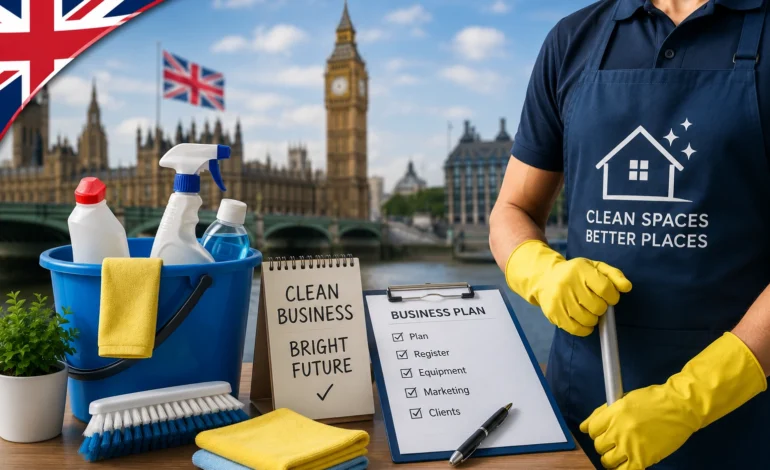
The cleaning industry is one of the most accessible sectors to break into in the UK. Startup costs are low, demand is steady across both homes and businesses, and you can begin small and scale at your own pace. But like any business, getting the foundations right — legal structure, insurance, pricing, and marketing — makes the difference between a side hustle that fizzles out and a company that grows.
This guide walks through everything you need to know to start a cleaning business in the UK, from registration to your first customers.
1. Choose Your Cleaning Niche
Before anything else, decide what kind of cleaning services you’ll offer. The niche you choose shapes your equipment needs, pricing, target customers, and marketing approach.
Common options include:
- Domestic cleaning — regular home cleans, one-off deep cleans, spring cleaning
- End-of-tenancy cleaning — popular with landlords, letting agents, and tenants needing deposits returned
- Commercial/office cleaning — recurring contracts with businesses, often larger and more stable revenue
- Specialist cleaning — carpet and upholstery cleaning, window cleaning, or after-builders cleaning
Many new business owners start with domestic cleaning because it requires the least equipment and capital, then expand into commercial contracts or specialist services once they’ve built a client base and reputation.
2. Register Your Business
You have two main options for structuring your cleaning business in the UK:
Sole trader The simplest route. You register with HMRC for Self Assessment, keep records of income and expenses, and pay Income Tax and National Insurance on profits. There’s minimal paperwork to get started, but you’re personally liable for any business debts.
Limited company You register with Companies House, which creates a separate legal entity. This offers liability protection (your personal assets are generally protected if the business runs into financial trouble) and can be more tax-efficient once profits grow, but comes with more administrative responsibilities, including filing annual accounts.
Most cleaners starting out choose the sole trader route for simplicity, then consider switching to a limited company as the business grows.
You’ll also need to register for VAT if your taxable turnover exceeds £90,000 in any rolling 12-month period. Below that threshold, VAT registration is optional.
3. Get the Right Insurance
Insurance isn’t just a formality — it protects you, your business, and your clients.
- Public liability insurance — covers accidental damage to a client’s property or injury caused while working. Most clients, especially commercial ones, will expect to see proof of this before hiring you.
- Employers’ liability insurance — a legal requirement in the UK the moment you take on any staff, even part-time.
- Treatment risk or indemnity insurance — worth considering if you offer specialist services like carpet cleaning, where the risk of damaging items is higher.
Skipping insurance to save money is one of the most common — and costly — mistakes new cleaning business owners make.
4. Budget for Startup Costs
Cleaning businesses are relatively cheap to start compared to most industries, but you’ll still need to budget for:
- Equipment — vacuum cleaner, mop, buckets, cleaning cloths, and eco-friendly or specialist products
- Transport — a reliable car or van if you’re travelling between jobs, plus fuel and insurance
- DBS checks — a Disclosure and Barring Service check reassures clients, particularly important if you’re cleaning private homes or working with vulnerable people
- Insurance premiums (see above)
- Branding and uniforms — even simple branded polo shirts and a professional-looking invoice can set you apart
- Website and marketing materials
Many cleaners start with a few hundred pounds of basic equipment and grow their toolkit as income increases, rather than investing heavily upfront.
5. Set Your Pricing
Pricing depends on location, service type, and competition, but the two most common models are:
- Hourly rate — typically £12–£20 per hour outside London, with London rates often higher
- Fixed price per job — common for end-of-tenancy cleans or one-off deep cleans, where you quote based on property size and condition
Research local competitors before settling on your rates, and don’t be afraid to charge a premium if you offer something distinctive — reliability, eco-friendly products, or specialist skills all justify higher prices.
6. Market Your Business
Once you’re set up, the challenge shifts to finding clients.
- Google Business Profile — essential for local search visibility. Most people searching “cleaner near me” will see Google Maps results first.
- Word of mouth and referrals — offer a discount or incentive for clients who refer friends and family
- Local Facebook groups and community boards — a low-cost way to reach nearby households
- Partnerships — letting agents and landlords are a strong source of repeat business for end-of-tenancy cleaning
- Flyers and local advertising — still effective in specific neighbourhoods, particularly for domestic cleaning
Consistency matters more than any single channel. A professional online presence combined with reliable, high-quality work tends to generate steady referrals over time.
7. Plan for Growth
Once you’ve established a base of regular clients, think about how you want to scale:
- Hiring your first employee or subcontractor (triggering employers’ liability insurance requirements)
- Moving from domestic to commercial contracts for more predictable income
- Investing in a booking and scheduling system as your client list grows
- Building a recognisable brand that can eventually operate without you doing every clean yourself
Final Thoughts
Starting a cleaning business in the UK doesn’t require a huge upfront investment, but success depends on getting the basics right: proper registration, adequate insurance, sensible pricing, and consistent marketing. Start focused — pick one niche, serve it well, and build your reputation before expanding into new services or hiring staff.










1 Comment
[…] is a smart investment does not have a simple yes-or-no answer. The right franchise can provide a strong business opportunity, but success depends on choosing the right brand, understanding the financial commitment and being […]