Global Market Outlook for Sustainable Marine Fuels

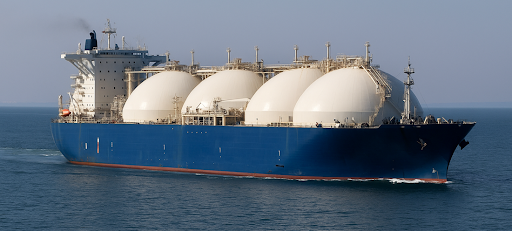
Shipping has a dirty secret. It runs on some of the worst fuel on the planet — thick, sulfurous stuff that makes diesel look clean. And because roughly 80% of global trade moves by sea, all that burning adds up to nearly 3% of the world’s CO₂ every year. More than most countries produce in total.
So yeah, something has to give.
Sustainable marine fuels aren’t a new idea, but they’ve stopped being a “someday” conversation. Money is actually moving. Ships are being ordered with new engines. Ports are quietly retrofitting their bunkering systems. If you work anywhere near shipping, energy, or climate regulation, this market is worth paying attention to — because it’s not creeping forward anymore; it’s accelerating.
Let’s Speak about Numbers
The sustainable marine fuels market sat at about $5–6 billion in 2023. By 2030, it could double. By 2050, some projections run past $100 billion as decarbonization mandates go from background pressure to hard deadlines . That’s not incremental growth — that’s a different industry on the other end of it.
The fuels getting real commercial traction right now are LNG, bio-methanol, green ammonia, and advanced biofuels. Each one is at a different stage of readiness . LNG is available today but it’s a stepping stone, not a destination — methane slip (the gas that leaks unburned) undercuts its climate case. Green ammonia and hydrogen are further out but probably where this ends up long-term.
Why Is Everyone Shifting Now?
A few things landed at the same time, and the industry didn’t really have a choice.
The IMO revised its greenhouse gas strategy in 2023, setting a net-zero target “by or around 2050.” That might sound soft, but it’s a legal anchor for every shipping company in the world. Then the EU’s FuelEU Maritime regulation kicked in at the start of 2025, requiring ships to cut fuel GHG intensity — 6% by 2030, 80% by 2050. Those aren’t aspirations. They’re compliance requirements with financial consequences.
The Carbon Intensity Indicator (CII) system is already rating ships on emissions performance. A bad score doesn’t just feel bad — it actually affects whether charterers will book your vessel and what ports will accept it. That’s when ship owners start returning calls from fuel suppliers.
And then there’s the Sustainable Marine Fuel Forum, which has done something genuinely useful in a space that tends to produce more reports than results. It’s brought fuel producers, shipowners, ports, and policymakers into the same room — not for photo ops, but to work through bunkering standards and investment signals that make scaling actually possible. That kind of coordination matters more than people give it credit for.
Case Study #1 — Maersk’s Methanol Bet
In 2024, Maersk took delivery of the Laura Maersk — the first large container ship built to run on green methanol. It wasn’t a concept vessel or a one-off. Maersk has 19 methanol dual-fuel ships on order, with an investment running well into the billions.
Methanol made sense for a few practical reasons. It’s liquid at room temperature, so ports don’t need cryogenic storage to handle it. It burns cleaner than heavy fuel oil. And the green version — produced from renewable electricity and biomass — has a near-zero lifecycle emissions profile. Bunkering availability is still thin in most corridors, but Maersk’s logic is that if they create enough demand, infrastructure follows. Several European and Asian ports have already added methanol bunkering in response. So far, the bet seems to be working.
Case Study #2 — NYK Line’s Biofuel Voyages
Japan’s NYK Line ran a string of commercial voyages in 2022 and 2023 using B30 biofuel blends – 30% biofuel, 70% conventional marine fuel – without any engine modifications whatsoever. No retrofits, no drama. CO₂ reductions were measurable, operations were smooth, and the fuel carried ISCC certification, which counts towards regulatory compliance.
It sounds simple, and honestly, it kind of is — which is exactly the point. Blended biofuels let operators cut emissions now without waiting for green ammonia infrastructure that won’t exist at scale for another decade. NYK called it a bridge strategy. The Japanese government helped fund it. It’s not a permanent solution, but it’s a real one.
What’s Actually in the Way
Cost is the honest answer. Green ammonia runs 3–5 times the price of conventional bunker fuel per unit of energy. Green methanol isn’t cheap either. Until electrolyzer costs fall and production volumes climb, operators running tight margins are going to drag their feet — and you can’t really blame them.
Port infrastructure is the other wall. Rotterdam, Singapore, and Busan are moving, but most ports globally are still years behind. You can have the cleanest fuel in the world and nowhere to load it.
And with ammonia specifically, there’s a crew safety dimension that doesn’t get talked about enough. It’s toxic. Not in a hand-wavy theoretical sense — in a requires-serious-training-and-handling-protocol sense. The engineering is solvable, but it’s not free.
Frequently Asked Questions
Q1. What actually counts as a sustainable marine fuel?
Any fuel with meaningfully lower lifecycle greenhouse gas emissions than conventional heavy fuel oil . Green methanol, green ammonia, advanced biofuels, synthetic e-fuels, and hydrogen all qualify . LNG gets debated — it’s cleaner in some ways, but methane slip is a real problem that muddies the math.
Q2. Is ammonia actually safe to run a ship on? It’s toxic, so it needs stricter handling than diesel. That’s a real constraint. But the shipping industry already moves dangerous cargoes every day — this is an engineering and training challenge, not a wall. Engine makers like MAN Energy Solutions already have ammonia-ready designs in production.
Q3. What does the Sustainable Marine Fuel Forum actually do? In practice, it’s a coordination mechanism for a supply chain that badly needed one. The Sustainable Marine Fuel Forum puts fuel producers, ship operators, port authorities, and investors in the same conversations so that standards get aligned and infrastructure investment happens in the right places . Without that, everyone waits for everyone else and nothing gets built .
Q4. Will biofuels dominate the marine fuel market?
Probably not fully — there’s a ceiling on how much feedstock exists. But blended biofuels will likely carry a lot of the load through the 2030s while the green ammonia and methanol supply chains catch up. It’s not glamorous, but it’s what’s available at scale right now .
Q5. Should smaller operators even bother thinking about this yet?
Yes — and not just for the environment. CII ratings are already affecting vessel values and charter contracts. Sustainability disclosure is becoming standard in procurement. Waiting until 2028 to start thinking about any of this will cost more than starting now. The companies that figure out crew training and fuel procurement early won’t be scrambling when the next round of regulations lands.
The direction here isn’t really up for debate. Ships are being built for these fuels, the regulations are live, and forums like the Sustainable Marine Fuel Forum are creating the coordination layer that makes markets function. Whether you think the pace is too slow or too fast probably depends on where you sit in the supply chain – but the industry is past the point of asking “if”.
About The Author